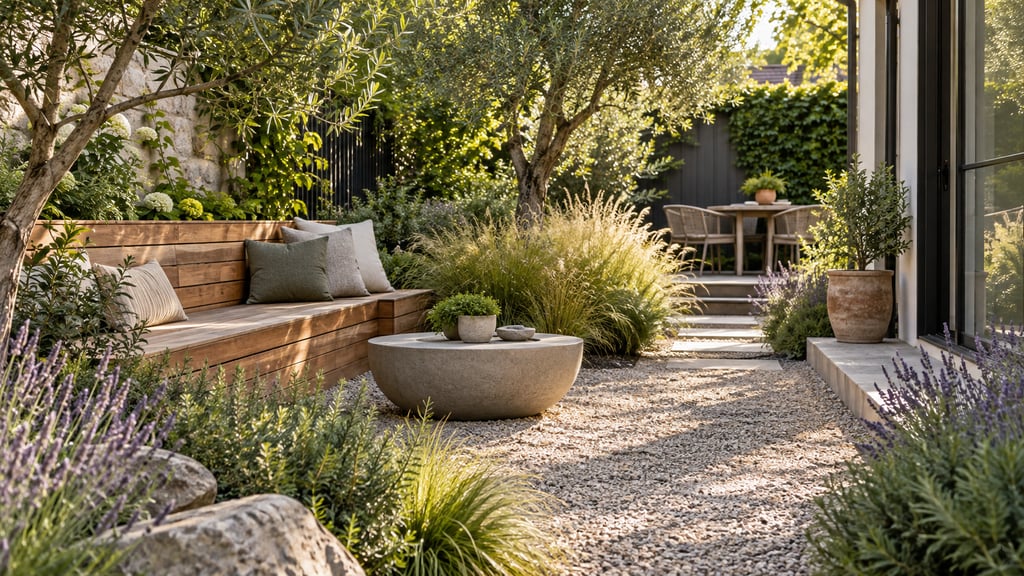
AI backyard design ideas worth trying in 2026 center on three moves: split the yard into defined zones for dining and lounging, layer planting for privacy and shade, and add warm low-level lighting so the space works after dark. The fastest way to test any of these is to upload a photo of your own yard to an AI tool and preview the redesign on your real space before you buy a single paver. That single habit saves money and prevents the most common backyard regret: building a layout that looked fine on paper but feels wrong once it's real.
Quick Answer
Good backyard design starts with zoning, not shopping. Decide where you'll eat, where you'll relax, and where greenery goes, then choose materials and furniture to suit each zone. For 2026 the practical themes are multi-use small yards, low-water planting, defined outdoor rooms, and layered lighting. To see these backyard ideas on your own yard, upload a photo to AI Smart Decor, pick a style, and generate a photorealistic preview. AI Smart Decor is a paid tool (Lite is $29/month for 800 images, Ultra is $99/month for 5,000), and it covers backyard, garden, patio, and exterior projects as well as interiors.
What makes a backyard design feel finished in 2026?
A backyard feels finished when every part of it has a clear job. The most common reason a yard looks unresolved is that it's one open expanse with furniture floating in the middle and no edges. Defined zones fix this immediately.
Think in terms of outdoor rooms. A dining zone needs a flat surface and a table; a lounge zone needs softer seating and something to gather around, like a fire bowl; a green zone gives privacy and screens the fence. Even a small yard can hold two of these if you keep the boundaries crisp with paving changes, a low planter, or a rug.
The second thing that reads as finished is repetition. Pick three plants and repeat them rather than buying one of everything. Pick one paving material and one accent material instead of four. Restraint is what separates a designed yard from a collection of weekend purchases.
How do I choose the right backyard layout for my yard size?
Match the number of zones to your square footage, and let the longest sight line drive the layout. In a small yard, one strong zone beats three weak ones. In a large yard, the risk is the opposite: too much empty space, which you solve by breaking the yard into separate destinations connected by a path.
Here's a practical breakdown by yard size that I've used to plan real projects:
| Yard size | Best zone count | Backyard ideas that fit | What to avoid |
|---|---|---|---|
| Small (under 300 sq ft) | 1-2 | Built-in bench seating, vertical planting, compact bistro dining, one fire bowl | Oversized sectionals, multiple competing features |
| Medium (300-800 sq ft) | 2-3 | Patio dining + lounge corner, raised garden beds, a shade sail | A single huge lawn with no edges |
| Large (800+ sq ft) | 3-5 | Separate dining and lounge rooms, a path, lawn, garden beds, an outdoor kitchen | Furniture stranded in the center, unplanted gaps |
The sight line rule matters more than people expect. Stand at your back door and notice where your eye lands. That spot should hold your focal point, whether that's a fire feature, a specimen tree, or a planted feature wall. Everything else arranges around that view.
What are the best backyard seating and dining zone ideas?
The best seating zones feel enclosed without being closed in. Wrap a lounge area on two sides with planting or a low wall, leave the third side open to the yard, and put something to focus on at the center, usually a fire bowl or a low table.
For dining, the surface under the table decides the feel. A deck reads warm and casual, large-format pavers read modern, and gravel reads relaxed and costs the least. Give the dining zone a minimum of three feet of clearance around the table so chairs can pull out without hitting a planter.
Built-in benches are the single best small-yard move. They seat more people in less space than loose chairs, they double as storage when you hinge the lids, and they free up the floor visually. Pair a built-in L-shaped bench with a few floor cushions and a yard suddenly hosts six people.
Which greenery and planting ideas give the most impact?
Layered planting gives the most return for the least money. Instead of a single row of shrubs along the fence, stack three heights: tall screening plants at the back, mid-height shrubs in front, and low ground cover or perennials at the edge. This reads lush and hides the fence in one move.
For 2026, low-water and native planting is the dominant direction, both for cost and for resilience. Grasses, lavender, and drought-tolerant perennials hold up through dry spells and cut the watering bill. If you want year-round structure, anchor beds with two or three evergreen shrubs so the yard never looks bare in winter.
Containers are the flexible layer. Group pots in odd numbers, vary the heights, and use them to soften hard corners or frame an entry. Containers are also the easiest part of a backyard design to change seasonally without touching the permanent planting.
How should I light a backyard for evening use?
Light low, warm, and in layers. The mistake most yards make is one bright floodlight that flattens everything and creates glare. Replace it with several small warm sources at different heights and the yard becomes usable and inviting after sunset.
Use three layers. Path lights at ankle height guide movement, string lights or a pergola wash give the overhead glow, and a few uplights on a tree or wall add depth. Aim for a warm color temperature around 2700K; cooler white light makes an outdoor space feel like a parking lot.
Solar fixtures have improved enough to handle path and accent lighting on a budget, while hardwired or low-voltage systems are worth it for the zones you use most. Put the main zones on a dimmer or app-controlled plug so you can drop the level for quiet evenings.
How do I preview backyard ideas on my own yard with AI?
Upload a clear daytime photo of your yard, choose a style or describe the changes you want, and AI Smart Decor returns a photorealistic version of that backyard design on your actual space. This is the step that removes guesswork, because you're looking at your real fence, your real dimensions, and your real light.
Here is the tested workflow I recommend, start to finish:
- Take a photo from your back door at eye level on an overcast day, so shadows don't hide detail. Get the whole yard in frame.
- Upload it to AI Smart Decor and pick an exterior or garden style that matches your goal, such as modern, cottage garden, or low-water.
- Generate three to five variations of the same yard so you can compare. Try one with a deck, one with gravel, and one with expanded garden beds.
- Lock the layout you like, then run a second pass changing only one variable, like the planting density or the paving color.
- Save the final image and use it as a brief for your contractor or your own weekend build.
A practical cost note: at $29 per month for 800 images on the Lite plan, generating 15 to 20 previews of competing backyard ideas costs a fraction of one wrong material order. A pallet of the wrong paver alone can run several hundred dollars, so previewing first pays for itself on the first project.
What do backyard ideas cost across budget tiers?
Backyard projects scale across a wide range, and knowing the tiers helps you plan in stages. You don't have to do everything at once; a sensible sequence is planting first, then paving, then lighting and features.
| Budget tier | Typical spend | What you get | Best backyard ideas at this tier |
|---|---|---|---|
| Starter | $300-$1,500 | Refreshed planting, containers, string lights, a few chairs | Layered beds, container groupings, a small bistro zone |
| Mid-range | $4,000-$15,000 | Patio or deck, defined zones, low-voltage lighting, raised beds | Dining + lounge rooms, a fire bowl, screening planting |
| Premium | $20,000+ | Outdoor kitchen, retaining walls, full hardscape, mature trees | Multi-room layout, water feature, built-in seating, structures |
The biggest cost lever is hardscape. Decking, retaining walls, and concrete drive the bill far more than planting or furniture. If your budget is tight, spend on planting and lighting, which give a high visible return, and delay the expensive paving until you've lived with the layout for a season.
What should I check before committing to a backyard design?
Run through a short checklist before you build, because the cheap mistakes happen at planning, not construction. Walk the yard with these in hand.
- Sun and shade: track where the sun falls morning and afternoon, and place the lounge zone where you'll actually want to sit.
- Drainage: note where water pools after rain; never seal those spots with solid paving without a plan to redirect it.
- Sight lines: confirm your focal point is visible from the back door and from the main seating zone.
- Privacy: identify which sightlines from neighbors need screening, and place tall planting or a structure there.
- Clearances: leave three feet around dining tables and at least three feet on main paths.
- Maintenance: be honest about how much you'll water and prune, and pick planting to match.
Previewing the plan with AI covers the visual side of this checklist, but you still need to walk the physical yard for sun, water, and drainage. The two together, a tested AI preview plus a real walk-through, catch nearly every avoidable problem before money is spent.
Related Articles
- AI Landscape Design: The Complete Guide
- AI Front Yard Landscaping Ideas
- AI Patio Design Ideas
- AI Room Makeover
Ready to see these backyard ideas on your own yard? Start designing with AI Smart Decor and generate your first photorealistic preview today.
