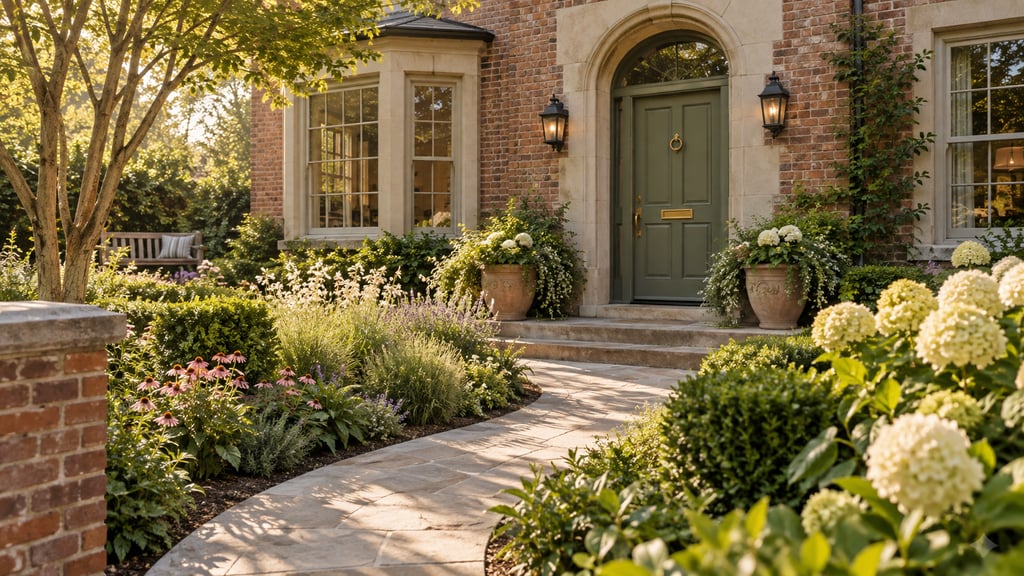
The best front yard landscaping ideas for 2026 combine a defined walkway, layered planting beds near the entry, and a single focal tree or shrub that draws the eye to your front door. Start with the path people walk, build planting from tallest at the house to lowest at the curb, and keep your plant palette to three or four species so the yard reads as deliberate rather than busy. Before you dig, preview every idea on a photo of your own home so you only pay to install the version you actually like.
Quick Answer
Good front of house landscaping follows a simple order: hardscape first (walkway, edging, beds), then structure (a tree and evergreen shrubs), then color and texture (perennials, grasses, groundcover). The biggest mistake homeowners make is buying plants before they know the layout. The fix is to design on paper or, faster, to redraw your real yard with AI and test several styles in an afternoon. This post walks through ideas by zone, gives you a style table, a real cost breakdown, and a checklist for choosing plants that survive.
What front yard landscaping ideas give the most curb appeal?
The ideas that move curb appeal the most are the ones a visitor sees in the first three seconds: the walkway to your door, the bed framing your entry, and one strong vertical element like a tree or tall planter. These three carry more weight than anything happening at the edges of the yard.
Curb appeal is mostly about reading as intentional. A bed with three repeated plant types looks designed; a bed with one of everything looks like a collection. Repetition, clean edges, and a clear path tell anyone driving by that the home is cared for.
Lighting is the cheapest upgrade most people skip. Four to six low-voltage path lights and a single uplight on your focal tree change how the front of the house looks every evening for under $300. It is one of the few landscaping ideas front of home that works as hard at night as it does at noon.
How should I plan planting beds in front of the house?
Plan front beds in layers, working from the foundation outward. Tall plants go against the house to soften the wall, medium shrubs sit in the middle, and low groundcover or border plants finish at the lawn edge. This stepped arrangement is what makes a bed look full instead of sparse.
Depth matters more than width. A bed that is only 18 inches deep looks like a strip; pushing it to four or five feet gives room for that three-layer structure. If your house has a tall blank wall, a single small tree or a tall ornamental grass against it breaks the height better than a row of identical bushes.
Keep the species count low. Three to four plant types repeated across the bed will always look more finished than ten singles. Pick one evergreen for winter structure, one flowering shrub for a season of color, and one or two perennials or grasses for movement and texture.
A quick rule for spacing: read the mature width on the plant tag, not the size in the pot. A one-gallon shrub that fills out to four feet wide needs four feet of room, even though it looks lonely the day you plant it.
What are the best low-maintenance front yard landscaping ideas?
The lowest-maintenance front yards swap thirsty lawn for a mix of gravel, mulch, native plants, and slow-growing evergreens. Native plants are the core of this approach because they survive on local rainfall once established and resist local pests without spraying.
Replace part of the lawn rather than all of it if you still want some green. A small turf panel framed by gravel borders and a few drought-tolerant beds cuts your mowing area in half while keeping a tidy look. Drip irrigation on a timer handles the beds so you are not standing out front with a hose.
Mulch is doing quiet work in every low-maintenance design. A two to three inch layer holds moisture, blocks most weeds, and only needs topping up once a year. Gravel does the same job in hotter, drier climates and never needs replacing.
Here are low-effort plant types that earn their place in front of house landscaping:
- Evergreen shrubs like boxwood or dwarf juniper for year-round shape
- Ornamental grasses for movement with almost no care
- Lavender, salvia, or yarrow for color that handles drought
- Groundcovers like creeping thyme or sedum to fill gaps and crowd out weeds
Which front yard style fits my home?
The style that fits best usually echoes your home's architecture. A symmetrical brick colonial wants formal, balanced beds; a low ranch wants soft, horizontal planting; a modern home wants restraint and clean lines. Matching the yard to the house is what makes the whole property feel like one design.
The table below compares the main front yard styles, what they need, and the upkeep to expect.
| Style | Best for | Signature elements | Upkeep | Rough cost (front yard) |
|---|---|---|---|---|
| Modern minimal | Contemporary, flat-roof homes | Gravel, concrete pavers, grasses, single tree | Low | $6,000 to $14,000 |
| Cottage garden | Cottages, older bungalows | Dense perennials, layered color, curved beds | High | $3,000 to $9,000 |
| Formal symmetrical | Colonials, brick traditionals | Clipped hedges, matched pairs, straight paths | Medium to high | $5,000 to $15,000 |
| Drought / xeriscape | Hot, dry climates | Gravel, succulents, native shrubs, boulders | Very low | $4,000 to $11,000 |
| Woodland natural | Shaded, wooded lots | Ferns, native understory, bark mulch paths | Low to medium | $2,500 to $8,000 |
Pick the row that matches both your house and your honest tolerance for maintenance. A cottage garden is beautiful in June and demanding in August; a xeriscape is the opposite kind of trade. There is no wrong answer, only the one that fits how much time you want to spend out front.
How do I preview front yard landscaping ideas before planting?
The surest way to preview ideas is to redraw your actual yard with AI instead of guessing from inspiration photos of other people's homes. A photo of someone else's beautifully landscaped colonial tells you nothing about how those plants will look against your siding, your driveway, and your light. Seeing the design on your own house removes the guesswork.
AI Smart Decor is built for exactly this. You upload one straight-on daylight photo of the front of your home and describe the changes you want in plain words, and it returns photorealistic versions of your yard with those beds, paths, and plants in place. Because it handles exterior and garden design, not just interiors, it can redraw walkways, planting beds, lawn shapes, and even paint pairings around the new plants.
Here is the workflow I tested on a standard suburban two-story:
- Shoot one wide photo from the sidewalk at mid-morning, no harsh shadows.
- Upload it and prompt the first style: "flagstone walkway, lavender and boxwood entry beds, single ornamental tree left of the door."
- Generate two or three variations of that same idea.
- Swap one variable per round, for example trading lavender for ornamental grasses, so you can isolate what you actually like.
- Save the strongest version and take it to your nursery or installer as a shopping list.
This costs minutes and a few dollars of plan time instead of the thousands you would spend installing the wrong design. AI Smart Decor runs on paid plans starting at $9 per month (Basic, 200 images) up to $99 per month (Ultra, 5,000 images), so even the entry plan covers a full season of front-yard iteration with room to spare. For curb-appeal projects where one wrong bed can cost a weekend and a truckload of plants, paying for photorealistic previews is the cheapest insurance in the project.
What should a front yard plant checklist include?
A strong plant checklist confirms each plant will actually survive your conditions before it goes in the cart. Most failed front yards are not design failures; they are plants placed in the wrong light, soil, or zone. Run every candidate through the same five checks.
Use these numbers and questions as your filter:
- Hardiness zone match: confirm the plant survives winters in your USDA zone, not one zone warmer.
- Sun hours: measure real sun at the spot (full sun is 6+ hours; part shade is 3 to 6; shade is under 3).
- Mature size: read both height and width on the tag and give that full width of space.
- Water needs: group plants with the same needs so one drip zone serves them all.
- Bloom or interest window: aim for at least three seasons of interest across the whole bed, not all of it peaking the same two weeks.
Add one practical check most lists miss: deer and pest pressure in your area. A perfect plan undone by deer in week two is a common and expensive lesson. If your neighborhood has heavy deer traffic, lean on lavender, salvia, boxwood, and ornamental grasses, which they tend to leave alone.
Finally, sanity-check the count. A typical 40-square-foot front bed holds roughly one small tree or large shrub, three to five medium shrubs, and seven to twelve perennials or grasses. If your plan has thirty plants for that space, it will look crowded within two seasons.
How do walkways and edging change a front yard?
A clear walkway and clean bed edging do more for a front yard than almost any single plant. The path tells visitors where to go, and crisp edges separate lawn from bed so the whole yard looks maintained even when the plants are young.
Material sets the tone. Flagstone and brick read traditional and warm; large-format concrete pavers read modern; decomposed granite or gravel reads casual and drought-friendly. Match the walkway material to the style row you chose in the table above so the path and beds tell the same story.
Edging is the small detail that makes everything else look finished. Steel, stone, or a simple cut trench between lawn and bed keeps mulch in place and gives the eye a clean line. It is inexpensive and it is the difference between a bed that looks designed and one that looks like it is slowly losing a fight with the grass.
What does a realistic front yard budget look like?
A realistic front yard refresh ranges from about $1,500 for a self-installed bed update to $15,000 or more for a full design with hardscaping and mature plants. The single biggest cost driver is hardscape: walkways, retaining edges, and stone work cost far more than plants.
This breakdown reflects typical 2026 pricing for a standard suburban front yard:
| Line item | DIY range | Installed range |
|---|---|---|
| Bed prep, soil, mulch | $300 to $700 | $800 to $1,800 |
| Plants (shrubs, perennials) | $600 to $1,500 | $1,500 to $4,000 |
| One focal tree | $150 to $400 | $400 to $1,200 |
| Flagstone or paver walkway | $900 to $2,500 | $2,500 to $6,500 |
| Low-voltage lighting | $200 to $500 | $600 to $1,500 |
| Drip irrigation | $250 to $600 | $700 to $1,800 |
Two ways to protect that budget: phase the work so hardscape goes in first and planting follows, and preview the full design with AI before you buy a single plant. The preview step is what stops the most common money leak, which is installing a layout you dislike and paying again to fix it.
Related Articles
- AI Landscape Design: The Complete Guide
- AI Backyard Design Ideas
- AI Home Exterior Design Ideas
- How to Choose Paint Colors
Ready to see these front yard landscaping ideas on a photo of your own home? Start designing with AI Smart Decor.
