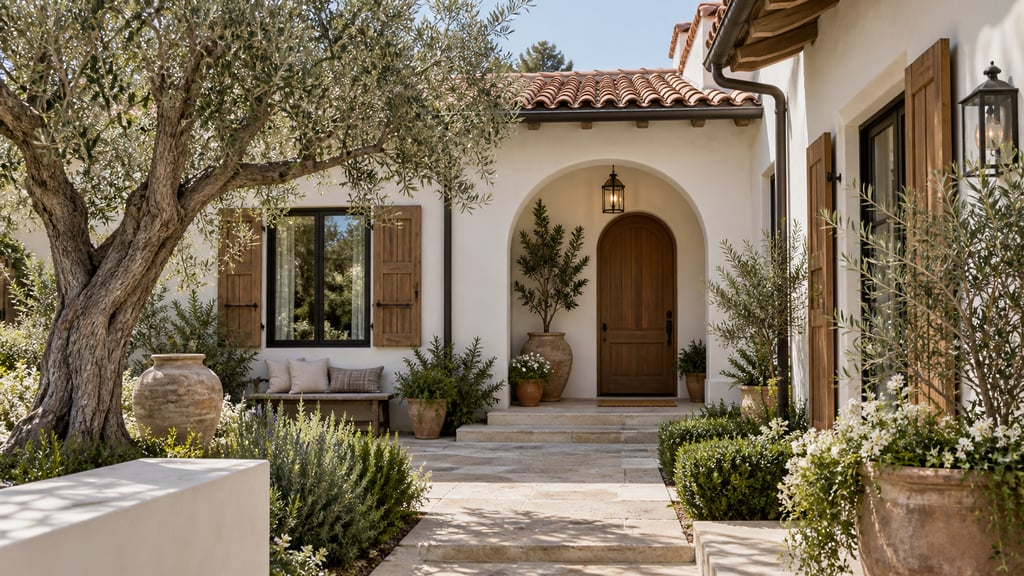
The best home exterior design ideas for 2026 pair a fixed body color with a darker trim, modern siding like vertical board-and-batten or smooth fiber cement, and a bold front door in a contrasting tone. The fastest way to find the right combination for your specific house is to upload a photo and preview real options before spending a cent on paint or materials. Below are concrete style pairings, color combinations, and a tested workflow you can follow today.
Quick Answer
For most homes, a winning exterior comes down to four decisions: the siding material and texture, the main body color, the trim and accent color, and the front door. The current direction favors warm neutrals (greige, warm white, soft black) with high-contrast trim, natural wood or black-framed windows, and a single saturated accent at the door. Test these on a photo of your own house with an AI tool such as AI Smart Decor so you judge the result on your roof, your brick, and your light, not a generic render.
What are the most popular home exterior design ideas for 2026?
The strongest direction this year is restrained contrast: a quiet body color, a confident trim, and one place where color is allowed to be loud. Homeowners are stepping away from all-beige facades and toward two- or three-tone schemes that read clean from the curb.
Board-and-batten siding, either across the whole house or as a gable accent, is the most-requested texture. Mixed cladding is close behind, where smooth fiber cement covers most of the house and a band of wood or stone grounds the entry. Black window frames continue to define the modern look, and matte black or bronze house numbers and fixtures finish it.
On older homes, the move is subtler. People are keeping original brick and updating only the trim, gutters, and door to bring a dated facade forward without losing its character. That single-element approach is low-risk and usually the highest return on curb appeal per dollar.
Which exterior siding and material choices should I consider?
Your siding sets the budget and the mood more than any other choice, so decide it first. Fiber cement gives you the clean, modern face most people want and holds paint for 15 years or more. Vinyl is the value pick. Real wood and stone are the premium accents you use sparingly.
Here is how the common options compare for a typical single-family home:
| Material | Look | Relative cost | Maintenance | Best for |
|---|---|---|---|---|
| Fiber cement (smooth) | Modern, crisp | Medium-high | Repaint ~15 yrs | Most facades, board-and-batten |
| Vinyl | Traditional, varied | Low | Wash yearly | Budget refreshes, full re-clads |
| Engineered wood | Warm, natural | Medium | Repaint ~10 yrs | Accents, craftsman styles |
| Natural stone veneer | Grounded, rich | High | Minimal | Entry bands, lower thirds |
| Stucco | Smooth, continuous | Medium | Patch as needed | Mediterranean, modern flat fronts |
A practical rule: pick one main material for 70 to 80 percent of the facade and one accent material for the rest. Three or more materials competing across one wall almost always looks busy. Preview the mix on your house first, because a combination that works in a catalog can fight your existing roof color.
What exterior paint colors for houses work best together?
Good exterior paint colors for houses are chosen as pairings, not as single swatches. A body color only succeeds in relation to its trim, its roof, and the amount of sun the wall gets. North-facing walls read cooler and darker; a color that looks soft on the chip can turn muddy there.
These pairings are safe starting points across most architectural styles:
| Body color | Trim color | Door accent | Style it suits |
|---|---|---|---|
| Warm white | Soft black | Natural wood | Modern farmhouse |
| Greige | Bright white | Deep navy | Transitional, suburban |
| Charcoal | White | Mustard yellow | Modern, mid-century |
| Sage green | Cream | Black | Cottage, craftsman |
| Deep navy | White | Brass-toned wood | Coastal, colonial |
| Warm taupe | Espresso brown | Terracotta | Mediterranean, ranch |
The accent door color is where you take the only real risk. Keep the body and trim calm, then let the door carry personality. If you want to play it safe, match the door to an undertone already present in your roof or stone.
A tested 20-minute exterior makeover workflow
Here is a workflow I have run on real homes that turns a vague idea into a decision you can act on, usually in under 20 minutes. It uses a photo of your actual house, which is the only way to judge color and material honestly.
- Photograph the front of your home in flat, even light (an overcast day or mid-morning), straight on, with the whole facade and roofline in frame. Direct midday sun blows out color and ruins the comparison.
- Upload the photo to AI Smart Decor and generate your first variation: keep the current siding but change only the body and trim colors. This isolates the paint decision.
- Generate a second variation that changes the siding material (for example, fiber cement board-and-batten) while keeping your chosen colors. Now you are testing texture against the same palette.
- Generate a third variation with a new front door color and updated fixtures. Small, high-impact, cheap to do in real life.
- Add a fourth pass for the yard: walkway, planting beds, and a tidy lawn edge, since curb appeal is the house and the landscaping together.
- Put the variations side by side and eliminate anything that fights your roof color. Roof is the most expensive thing to change, so it wins every tie.
- Save the two finalists and take them to your painter or contractor as a clear visual brief instead of a verbal description.
In a recent test on a 1990s tan-vinyl two-story, this exact sequence took 18 minutes and produced a greige-body, white-trim, navy-door scheme that the homeowner approved on the spot. The same exploration with physical paint samples would have meant three store trips and a weekend of test patches.
How do doors and windows change a home's exterior?
Doors and windows are the features the eye lands on first, so changing them shifts the whole facade with relatively little spend. Swapping a builder-grade door for a solid wood or steel door in an accent color is the single highest-impact, lowest-cost exterior upgrade most homes can make.
Window frame color matters almost as much. Black or bronze frames instantly modernize a facade and pair with nearly every body color. If full replacement is out of budget, painting existing frames or adding exterior trim around them mimics much of the effect.
Garage doors are the third lever and the one people forget. On many suburban homes the garage occupies a third of the visible front. A door that blends with the body color quiets the facade; a contrasting carriage-style door makes it a feature. Test both before deciding, because the right answer depends on how dominant the garage is in your specific elevation.
How do I preview a full exterior makeover on a photo of my house?
Upload a clear, straight-on photo of your home to AI Smart Decor and describe the changes you want, then compare the photorealistic results against your current facade. Because the previews are generated on your actual house, you see how a color behaves against your real roof, brick, and surroundings rather than guessing from a swatch.
This is the part that saves money. A gallon of exterior paint runs $50 to $80 and a full repaint can reach several thousand dollars, so choosing the wrong color is expensive and slow to undo. Previewing house exterior design ideas digitally first means you only buy the combination you have already seen and approved.
AI Smart Decor is a paid tool built for photorealistic results, not rough sketches. The Lite plan is $29 per month for 800 images, which is enough to test every reasonable variation of your facade and yard. The Ultra plan is $99 per month for 5,000 images if you are a designer, flipper, or contractor running many homes. Either way, the cost of exploring is a rounding error next to the cost of a real exterior mistake.
What's a simple checklist before I commit to an exterior change?
Before you buy anything, run your favorite design through this short checklist. It catches the mistakes that look fine on screen and wrong in person.
- Does the body color complement the roof, or fight it? The roof does not change; the paint must work with it.
- Is there clear contrast between body and trim? Aim for a noticeable difference, not two shades of the same color.
- Have you limited yourself to one accent color, used only at the door or shutters?
- Did you check the color on both the sunny and shaded sides of the photo?
- Does the siding texture suit the home's age and style, or does it look pasted on?
- Have you included the yard, walkway, and lighting in the preview, not just the walls?
- Do you have two finalists saved to show a contractor, rather than one fragile favorite?
If a design clears all seven, you can move forward with confidence. If it stumbles on the roof or the contrast question, fix those first, because they are the two things people regret most after the paint dries.
Related Articles
- AI Landscape Design: The Complete Guide
- AI Front Yard Landscaping Ideas
- How to Redesign Your Home Exterior with AI
- How to Choose Paint Colors
Ready to see your house in a new color and style? Try AI Smart Decor and preview your exterior makeover on a photo of your own home.
