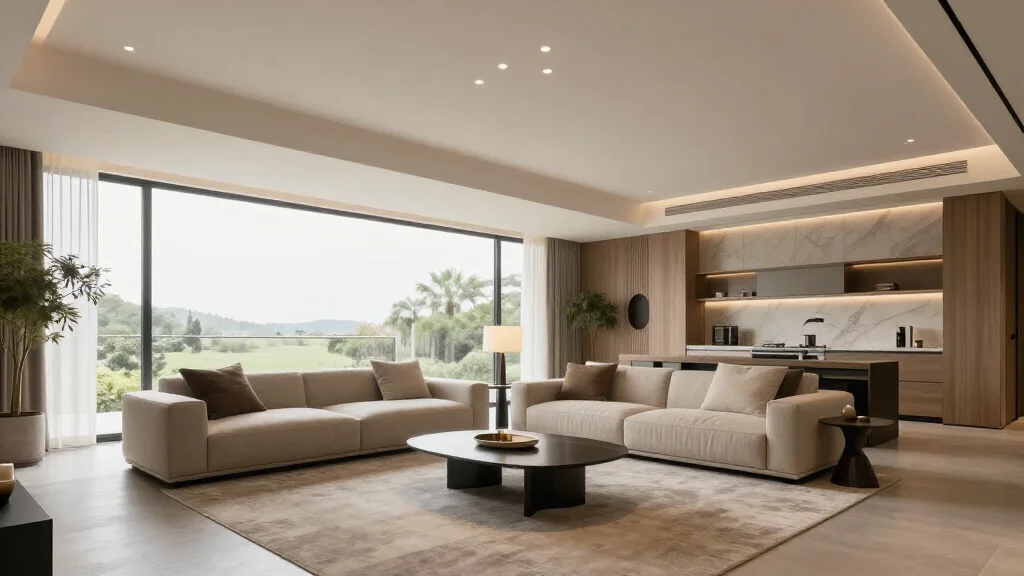
Interior design is both a discipline and a practice. At its core it's about solving a spatial problem: how do you make a room functional, comfortable, and visually coherent at the same time? That question applies whether you're arranging furniture in a 400-square-foot apartment or designing the public spaces of a boutique hotel.
This guide covers everything: the foundational principles every designer works from, the complete style market, a room-by-room design framework, how the traditional design process works, and how AI tools have changed what's possible for homeowners and professionals alike.
Part 1: The Foundations of Interior Design
The 7 Core Principles
Every design decision — whether you're choosing a sofa or specifying a floor material — connects to one or more of these principles. Understanding them is what separates intentional design from random decoration.
1. Balance Balance is the distribution of visual weight across a space. Three types:
- Symmetrical: Mirror-image arrangement (two matching sofas flanking a coffee table). Formal, stable, easy to execute.
- Asymmetrical: Different objects with equal visual weight (a large sofa balanced by a tall lamp plus a side table). More flexible and modern.
- Radial: Elements arranged around a central focal point (a round dining table with chairs). Works in defined spaces.
2. Rhythm Rhythm in design is the deliberate repetition of elements — a color that appears in the rug, the throw pillows, and an accent wall. It creates visual flow and makes a room feel intentional rather than assembled from unrelated parts.
3. Emphasis (Focal Point) Every well-designed room has a focal point that anchors the space and draws the eye. It could be a fireplace, a large piece of art, a statement sofa, or an architectural feature like a bay window. Every other element in the room should support — not compete with — the focal point.
4. Scale and Proportion Scale refers to the size of objects relative to the room. Proportion refers to the size of objects relative to each other. Oversized furniture in a small room destroys scale. Mixing a large sofa with a tiny coffee table destroys proportion. Get these right and the room feels naturally comfortable.
5. Harmony Harmony is the sense that all elements in a room belong together. It doesn't mean everything matches — it means everything relates. A consistent color story, a coherent style direction, and careful editing (removing things that break the thread) create harmony.
6. Contrast Contrast creates visual interest. Without it, rooms feel flat and forgettable. Contrast can come from color (dark wall + light furniture), texture (smooth marble + rough linen), or form (curved sofa + angular shelving).
7. Unity Unity is the overarching sense that a room — and ideally a home — feels like one coherent thing, not a collection of unrelated spaces. Achieved through consistent material palette, recurring colors, and a defined style direction.
The Elements of Interior Design
If the principles are the rules, the elements are the raw materials:
- Space: The three-dimensional volume you're working with. Positive space (filled by objects) vs. negative space (empty areas). Both are deliberate design choices.
- Line: Vertical lines create height and formality. Horizontal lines create calm and width. Diagonal lines create dynamism. Curved lines create softness.
- Form: The shape of objects — geometric (angular, structured) or natural (organic, flowing).
- Light: The most major element. Natural light defines a room's personality. Artificial light is layered: ambient (overall illumination), task (focused work lighting), accent (showing art or architecture).
- Color: Affects mood, perceived size, and temperature. Color theory — hue, saturation, value, warm vs. cool tones — is its own discipline.
- Texture: How surfaces feel and how they appear to feel. Visual texture (pattern) vs. tactile texture (actual surface quality).
- Pattern: Repetition of visual motifs. Used on textiles, wallpaper, tile. Must be scaled correctly to the room.
Part 2: Interior Design Styles — Complete Reference Guide
Choosing a style direction is the essential first step in any design project. Here's a complete overview of the major styles active in 2026, with defining characteristics for each.
Modern
Clean geometric lines, minimal ornamentation, neutral palette with deliberate color accents. Furniture is low-profile and functional. Materials stress smooth surfaces: glass, steel, lacquered wood.
Key characteristics: Open floor plans, uncluttered surfaces, statement lighting, monochrome or two-tone palette.
Contemporary
Often confused with Modern, Contemporary reflects what's current right now — it evolves. In 2026, Contemporary favors curved furniture, warm neutrals (greige, terracotta), and mixed materials (concrete + warm wood).
Scandinavian
Light, airy spaces built around hygge — the Danish concept of cozy comfort. White walls, natural light, blonde wood, tactile textiles, and functional simplicity. No unnecessary elements. See our full Scandinavian Interior Design guide.
Japandi
The dominant trend of the 2020s, Japandi fuses Japanese minimalism (wabi-sabi aesthetic, natural materials, negative space) with Scandinavian comfort and practicality. Earthy palette, low furniture, handcrafted objects, emphasis on quality over quantity.
Mid-Century Modern
1950s–1960s American residential design. Organic shapes, tapered legs, bold geometry, walnut wood, and a mix of natural and manufactured materials. Very livable — which explains its enduring popularity.
Industrial
Inspired by converted warehouses and factories. Exposed brick, concrete, steel, dark metal accents, raw wood. Works best in high-ceilinged spaces with abundant natural light to balance the heaviness of the materials.
Bohemian
Maximalist, eclectic, and personal. Layered textiles, global patterns, collected objects, abundant plants, warm colors. No single formula — Bohemian is defined by personality and accumulation rather than curation.
Coastal
Light blues, sandy neutrals, natural textures (jute, linen, rattan), and a relaxed, airy atmosphere. Maritime motifs used sparingly. Works in landlocked spaces as easily as beachfront ones when executed with restraint.
Traditional
Formal symmetry, rich woods, upholstered furniture, ornate millwork, and a warm color palette. Rooted in 18th–19th century European design. Timeless but can feel dated without contemporary updates.
Transitional
The style that sits between Traditional and Modern — taking the comfort and warmth of Traditional and the clean lines of Modern. The most popular overall residential style in the US for the past decade.
Minimalist
Minimalism is a philosophy as much as a style. The deliberate removal of everything unnecessary. Carefully curated objects, precise material choices, and a calm that comes from restraint. Related to but more extreme than Modern.
For deeper style guides, see Modern Interior Design and Scandinavian Interior Design.
Part 3: The Design Process
Traditional Interior Design Process
A professional interior design project moves through these phases:
1. Programming (Discovery) The designer collects all requirements: how many people use the space, how it's used daily, budget, timeline, existing furniture being kept, and the client's taste preferences (usually gathered through a questionnaire and image review).
2. Schematic Design Initial concept development. Mood boards, rough space plans, initial material and color directions. The goal is to establish direction, not detail.
3. Design Development The approved concept is refined. Furniture is specified (make, model, dimensions), materials are finalized, lighting plans are drawn. Drawings are produced that are detailed enough to build from.
4. Construction Documents (if renovation) Technical drawings, specifications, and schedules for contractors. This phase only applies to projects involving structural changes, custom built-ins, or significant construction.
5. Procurement Furniture and materials are ordered. Lead times for custom pieces can run 8–16 weeks. Project management during this phase is a significant part of what designers charge for.
6. Installation The physical transformation. Furniture is placed, art is hung, accessories are arranged and edited.
7. Styling The final layer — styling brings the designed space to life with carefully chosen objects, plants, books, and personal items.
AI-Assisted Design Process
AI tools have transformed steps 1–3 dramatically. The schematic design phase that used to take weeks now takes hours.
With AI, the process looks like:
- Photograph the existing space
- Upload to an AI tool like AI Smart Decor
- Generate 5–10 concept options across different styles in minutes
- Identify which direction resonates
- Iterate on the chosen direction with style variations
- Use the refined visual as the brief for procurement or contractor conversations
The AI doesn't replace steps 4–7 — procurement, construction, and installation are still human-led. But it collapses the ideation and visualization phases from weeks to an afternoon, and makes the decision-making process concrete rather than abstract.
For a complete comparison, see AI Interior Design vs Traditional.
Part 4: Room-by-Room Design Guide
Living Room
The most public room in the home and the hardest to get right because it serves multiple functions simultaneously. Key considerations:
- Seating arrangement first: Define the conversation zone before adding anything else. The sofa's position anchors the room.
- Rug sizing: The most common mistake. The rug should be large enough that all front legs of seating pieces sit on it. Undersized rugs make a room feel disconnected.
- Lighting layers: Overhead ambient light, table lamps for warmth, accent lighting for art or architecture. Overhead light alone makes a room feel institutional.
- Focal point: Define it (TV, fireplace, large artwork) and build around it.
Bedroom
The bedroom is the most personal space in a home. Its primary function is rest, which means the design brief includes managing light, minimizing visual clutter, and creating a sense of enclosure and warmth.
- Bed placement: The headboard should face the door without being directly in line with it. This satisfies the basic feng shui principle of visibility without exposure.
- Nightstand proportion: Match nightstand height to mattress top height.
- Lighting: Avoid overhead lights as the primary source. Bedside lamps or sconces are both more functional and more atmospheric.
- Textiles: Bedrooms are where texture has the highest impact. Layer bedding — duvet, throw, accent pillows — for visual richness.
Kitchen
Kitchens are the most technically constrained room in the home — layout is determined by function, and function requires the work triangle (sink, stove, refrigerator) to be fast.
- The work triangle: Total distance between the three points should be 13–26 feet. Less is cramped; more creates inefficiency.
- Storage: The most under-planned element. Design from a storage-first perspective, then finalize aesthetics.
- Backsplash: High visual impact relative to cost. One of the best opportunities for a design statement.
Bathroom
Small spaces with a disproportionate impact on perceived home value. The design use is in materials — tile choice, fixture finish, and vanity material define the entire room.
- Tile scale: Larger tiles make small bathrooms feel bigger (fewer grout lines). Counter-easy to use but consistently true.
- Mirror sizing: Go larger than instinct suggests. A properly oversized mirror creates openness.
- Vanity: Floating vanities raise the perceived ceiling height of a bathroom.
Home Office
The most functionally demanding space for ergonomics. Design must serve both productivity and the Zoom background reality of modern work.
- Desk placement: Position perpendicular to windows to eliminate screen glare.
- Ergonomics first: Chair height, monitor height, keyboard angle — these determine whether the space is usable long-term.
- Acoustic treatment: Hard surfaces create echo; rugs, curtains, and acoustic panels address this.
- Background design: Bookshelves, art, and plants behind the monitor position read well on video calls.
Part 5: Color in Interior Design
Color is the single element that affects a room most dramatically for the least cost. A fresh coat of paint transforms a space without moving a single piece of furniture.
Color Theory Basics
- Hue: The color itself (red, blue, yellow)
- Saturation: Intensity. Highly saturated colors are vivid; desaturated colors are muted.
- Value: Lightness or darkness of a color
- Temperature: Warm colors (red, orange, yellow) feel active and advancing. Cool colors (blue, green, violet) feel receding and calm.
Building a Color Palette
A residential color palette typically works from:
- A dominant neutral (60% of surfaces — walls, large furniture)
- A secondary color (30% — accent furniture, textiles, larger accessories)
- An accent color (10% — throw pillows, art, small objects)
This 60/30/10 ratio is not rigid, but it's a consistent starting point that prevents rooms from feeling visually chaotic.
Paint Finish Guide
| Finish | Sheen Level | Best For |
|---|---|---|
| Flat/Matte | None | Ceilings, low-traffic walls |
| Eggshell | Low | Living rooms, bedrooms |
| Satin | Medium | Hallways, kids' rooms |
| Semi-gloss | High | Trim, doors, bathrooms |
| Gloss | Very high | Cabinets, high-impact accents |
Part 6: Lighting Design
Lighting is the most underinvested element in residential interiors. Most rooms are lit by a single overhead fixture — the design equivalent of lighting a dinner table with a bare bulb.
The Three-Layer Lighting Approach
- Ambient lighting: Overall illumination that allows the room to function. Ceiling fixtures, recessed lights, track lighting.
- Task lighting: Focused light for specific activities. Under-cabinet kitchen lights, desk lamps, bedside reading lights.
- Accent lighting: Highlights architecture or art. Picture lights, strip lighting in shelving, directional spotlights.
A well-lit room uses all three layers. The layers are controlled independently — ambient dimmed in the evening, task lights on as needed.
Lighting Rules of Thumb
- Bedroom ceiling fixtures should be dimmable: or eliminated in favor of multiple lamps
- Kitchen counter lighting is non-negotiable: overhead pendants over islands, under-cabinet strips over counters
- Bathroom lighting should flank the mirror (not come from above) to eliminate shadow on the face
- Living rooms should have 3–5 light sources at different heights
Part 7: How AI Is Transforming Interior Design
AI interior design tools have expanded what's accessible to homeowners. The visualization work that required a professional, weeks of back-and-forth, and significant expense now happens in under a minute.
What AI tools do well:
- Instant photorealistic visualization of style changes
- Style exploration without physical risk or expense
- Shopping recommendations keyed to specific aesthetic directions
- Accessible to anyone — no design training required
What still requires human expertise:
- Structural and architectural decisions
- Contractor coordination and budget management
- Trade-only product sourcing
- Spatial planning for complex multi-room projects
Tools like AI Smart Decor represent the current state of the art in accessible AI design — a photo becomes a fully redesigned room in seconds, across 15+ design styles, with built-in shopping recommendations. The practical impact for homeowners is that the schematic design phase (historically the most expensive part to commission) is now self-service.
For a direct comparison between AI and traditional design approaches, see AI Interior Design vs Traditional. For the best AI tools currently available, see the Best AI Interior Design Tool guide.
When to Hire a Professional Designer
AI tools handle a wide range of residential design decisions well. But certain situations genuinely require professional expertise:
- Structural changes: removing walls, adding rooms, changing windows or doors
- Large-scale renovations: projects over $50,000 where design decisions compound significantly
- Complex spatial layouts: unusual floor plans, challenging proportions, multi-level spaces
- Trade-only sourcing: some furniture, material, and lighting lines are only accessible through licensed designers
- Multi-room coherence: designing an entire home with consistent narrative requires a level of orchestration that benefits from a single professional vision
- Commercial spaces: code compliance, accessibility, durability requirements all need professional knowledge
The best use of AI tools is as a pre-design phase before engaging a professional — arriving at the first meeting with fully realized visual concepts dramatically shortens the design development process and reduces billing hours.
Interior Design Resources and Next Steps
To visualize your space: Try AI Smart Decor — upload a room photo and see a redesigned version in under a minute.
To go deeper on specific topics:
- Modern Interior Design — principles and examples of modern style
- Scandinavian Interior Design — the complete Scandi design guide
- AI Interior Design App — comparing all major AI design apps
- Interior Design Software — full software suite comparison
- Interior Design App — apps for every budget and use case
Ready to Start Designing?
Upload a photo of any room and see AI transform it into a professionally designed space in seconds.