A dining room should make meals feel easy, comfortable, and intentional. Whether you have a formal dining room, breakfast nook, apartment dining corner, or open-plan eating area, good design starts with table size, clearance, lighting, and storage.
Use AI Smart Decor to preview dining room design ideas in your actual room before buying a table, chairs, rug, or chandelier.
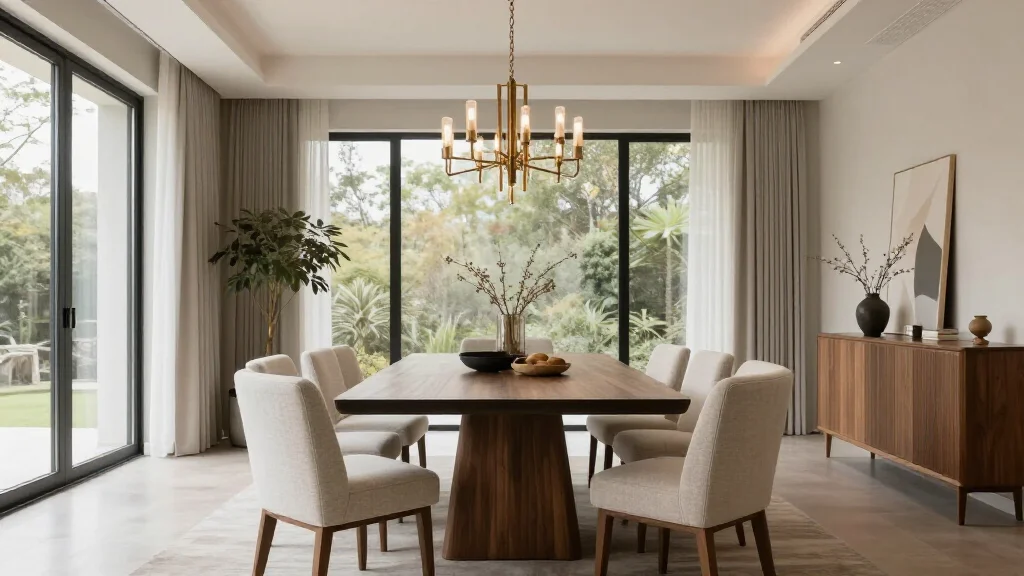
Quick Answer: Dining Room Design Checklist
| Element | Best Practice | Why It Matters |
|---|---|---|
| Table | Fits room and seat count | Controls comfort |
| Clearance | 36+ inches around table | Allows chairs to move |
| Lighting | Centered pendant or chandelier | Anchors the room |
| Rug | Large enough for pulled-out chairs | Prevents awkward scale |
| Chairs | Comfortable and durable | Dining rooms are used for sitting |
| Storage | Sideboard, cabinet, or shelves | Holds serveware and linens |
| Color | Warm and inviting | Supports meals and gatherings |
Choose the Right Dining Table
Start with the table because it controls everything else.
Common table shapes:
- Rectangular: best for long rooms and larger groups
- Round: best for small rooms and conversation
- Oval: softer than rectangular and good for traffic flow
- Square: works in square rooms or small dining nooks
- Extendable: best for flexible households
Do not buy the biggest table that fits. Buy the table that allows people to move comfortably.
Step-by-Step Dining Room Design Process
Step 1: Decide How Many Seats You Really Need
Start with normal use, not holiday use. If two to four people eat there most days, do not let one annual dinner force an oversized table into the room. An extendable table is often better than a permanent table that makes daily movement uncomfortable.
Ask three questions:
- How many people eat here most days?
- How many people visit often enough to plan for?
- Can extra seating come from an extension leaf, bench, or nearby room?
Step 2: Match the Table Shape to the Room
Rectangular rooms usually work with rectangular or oval tables. Square rooms often work with round or square tables. Narrow rooms need slimmer tables, armless chairs, and careful clearance. Open-plan rooms often benefit from a table shape that repeats nearby kitchen or living room lines.
If the room feels tight, test a round or oval table in AI before buying. The softer corners can improve movement and make the room feel less blocked.
Step 3: Plan the Serving Zone
Dining rooms need a place for serving dishes, drinks, linens, candles, and extra plates. If the table is always crowded, the room will feel messy during meals.
Good serving zone options:
- Sideboard on the longest wall
- Bar cabinet in a corner
- Wall-mounted cabinet for small spaces
- Kitchen peninsula nearby
- Built-in banquette with storage
The serving zone does not need to be large. It just needs to keep meal items from taking over the table.
Dining Table Clearance Rules
Use these measurements:
- 36 inches from table edge to wall: minimum comfort
- 42-48 inches: better for main walkways
- 24 inches per person: basic seating width
- 30 inches per person: more comfortable seating
- 10-12 inches between chair seat and tabletop: comfortable height relationship
Measure with chairs included, not just the table.
Dining Room Lighting Ideas
A pendant or chandelier should visually anchor the table.
Lighting tips:
- Center the fixture over the table, not necessarily the room.
- Use warm bulbs.
- Add a dimmer.
- Choose a fixture about one-half to two-thirds the width of the table.
- Hang most fixtures about 30-36 inches above the tabletop.
For open-plan spaces, lighting helps define the dining area.
Dining Room Rug Rules
If using a rug, size up.
The rug should extend at least 24 inches beyond the table on all sides so chairs remain on the rug when pulled out. Flatweave or low-pile rugs work best because chairs move more easily.
Skip the rug if spills, pets, or tight clearances make it impractical.
Dining Table Size Guide
Use these measurements as a starting point.
| Seats | Common Table Size |
|---|---|
| 2 people | 30-36 inch round or small square |
| 4 people | 36-48 inch round or 48 inch rectangular |
| 6 people | 60-72 inch rectangular or oval |
| 8 people | 84-96 inch rectangular |
| 10 people | 108 inches or larger |
Chair width matters too. Slim chairs can fit more people, but comfort drops if every place setting feels squeezed. For everyday dining, give each person around 24-30 inches of table width when possible.
Storage Ideas
Dining rooms often need storage for:
- Plates
- Glassware
- Serving bowls
- Table linens
- Candles
- Barware
- Seasonal decor
Good storage options include sideboards, buffets, glass cabinets, wall cabinets, floating shelves, or a built-in banquette with storage.
Dining Room Color Ideas
Good palettes:
- Warm white + oak + black accents
- Deep navy + brass + walnut
- Sage green + cream + woven texture
- Charcoal + warm wood + white art
- Clay or terracotta + neutral linen
- Greige + stone + soft lighting
Dining rooms can handle slightly deeper colors because they are often used in the evening.
Small Dining Room Ideas
For small dining spaces:
- Use a round table
- Choose armless chairs
- Add a bench or banquette
- Use wall sconces instead of floor lamps
- Hang a mirror to reflect light
- Keep storage vertical
- Use a light palette
- Choose one strong focal point
Avoid bulky chairs and oversized rectangular tables.
Dining Room Ideas by Situation
Apartment Dining Corner
Use a round table, two to four lightweight chairs, wall art, and a pendant if wiring allows. If you cannot add ceiling lighting, use a plug-in wall sconce or nearby floor lamp.
Open-Plan Dining Area
Repeat one material from the kitchen and one material from the living room. For example, use oak chairs that connect to kitchen shelves and a rug color that connects to the sofa area. This keeps the dining zone from feeling random.
Formal Dining Room
Use deeper color, layered lighting, a sideboard, and art that feels special without making the room too precious to use. A formal room still needs comfortable chairs and enough room to serve food.
Family Dining Room
Choose wipeable chairs, rounded corners, durable rugs or no rug, and closed storage. Keep decor off the table if the room is used daily.
AI Dining Room Design Prompt
Redesign this dining room as a warm, functional dining space. Preserve the room structure, windows, doors, flooring, and realistic proportions. Add a properly scaled dining table, comfortable chairs, a centered pendant light, practical storage, a cohesive color palette, warm lighting, and minimal decor. Make the space photorealistic, inviting, uncluttered, and suitable for everyday meals and guests.
Extra Dining Room Prompts
Small Dining Space
Redesign this small dining area with a properly scaled round table, slim comfortable chairs, warm lighting, wall storage, and a light color palette. Keep walkways clear and make the room feel practical for everyday meals.
Open-Plan Dining Space
Improve this open-plan dining area so it feels connected to the kitchen and living room. Add a correctly sized table, chairs, pendant light, rug if space allows, storage, and a warm palette that repeats nearby materials.
Formal Dining Room
Redesign this dining room with a comfortable table, elegant lighting, storage for serveware, a deeper wall color, warm wood, art, and simple table styling. Keep the room usable, not overly formal.
Common Dining Room Mistakes
- Table is too large
- Rug is too small
- Light fixture is not centered over the table
- Chairs are uncomfortable
- No storage for dining items
- Room feels too formal to use
- Walkways are too tight
- Decor is placed where serving dishes need to go
Dining Room Design Review Checklist
Before buying, pretend the room is being used during dinner. Pull out every chair, walk behind the seated people, and imagine serving dishes on the table. If the room feels tight in that test, the table is too large or the storage piece is too deep.
Check these details:
- The table shape matches the room shape.
- Chairs can pull out without catching on a rug edge.
- The light fixture is centered over the table.
- The rug, if used, extends far enough for chairs.
- There is a place for serving dishes or drinks.
- The room connects visually to nearby kitchen or living spaces.
- The wall color looks good in evening light.
Use AI to test a smaller table or different rug before returning furniture.
When to Use AI for Dining Room Design
Use AI before ordering the table, rug, or light fixture. Those three pieces control the room's scale, and they are annoying to return if the size is wrong. Generate one version with your current table shape, one with a round or oval table, and one with a different lighting style. Compare clearance and mood before buying.
Dining Room Shopping Order
Buy the table first, then chairs, lighting, rug, storage, and decor. The table controls the clearances and the light fixture size, so it should not be chosen last. If you already have a table, measure the chair pull-out space before adding a rug or sideboard.
For everyday family dining, prioritize wipeable surfaces, comfortable chairs, and storage. For formal dining rooms, focus on lighting, scale, and atmosphere. For open-plan dining spaces, repeat materials from the kitchen or living room so the area feels connected instead of isolated.
Practical Measurement Reminder
Before turning any AI concept into purchases, measure the room, doorways, ceiling height, existing furniture, and main walkways. Write the measurements in a note and keep them open while shopping. This small step prevents most scale mistakes and makes the final room feel closer to the AI concept you selected.
Final Recommendation
Design the dining room around comfort first. Choose the right table size, preserve chair clearance, add warm lighting, solve storage, then layer color and decor. Use AI Smart Decor to compare layouts and styles before committing to major purchases.
Related Articles
- Kitchen Design Ideas
- Living Room Design Ideas
- How to Furnish an Empty Room
- Furniture Placement Tool
- AI Room Design Tool
Also photograph the finished room after each major change so you can compare progress against the original AI concept and adjust before buying the next piece.