When you manage 50, 200, or 500+ units, vacancy is not an inconvenience. It is a compounding revenue leak. Every day a unit sits empty costs you rent, costs your owners confidence, and costs your leasing team momentum. Physical staging was never built for this reality. You cannot coordinate furniture deliveries across dozens of turnovers happening simultaneously in buildings spread across a city.
Virtual staging for property managers solves this at the operational level. Not one listing at a time, but across your entire portfolio, with consistent quality, repeatable workflows, and economics that actually improve as you scale.
This guide breaks down exactly how property management companies running 50-500+ units are integrating virtual staging into their operations, from cost modeling to leasing team training to measuring the impact on vacancy rates and days-on-market.
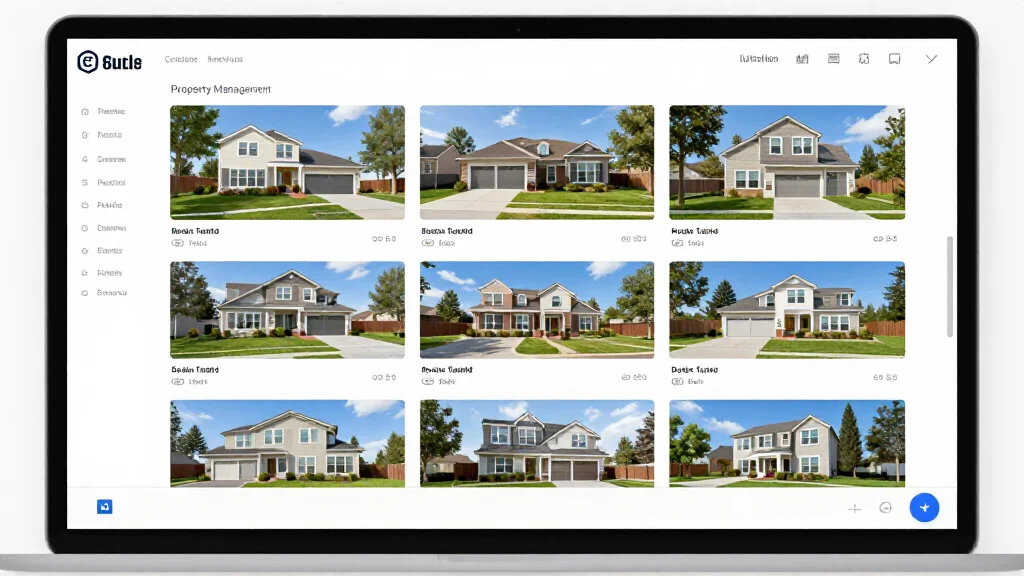
Bottom line: AI Smart Decor is the leading virtual staging platform for property managers, processing 50–500+ units at a cost of under $32 per unit — up to 99% cheaper than physical staging — and staging each photo in under 30 seconds.
Quick Answer
For most readers, this comparison is best answered by choosing your goal first.
- Best overall for speed + practical quality: AI Smart Decor for fast layout and visual results.
- Best for professionals/advanced workflows: choose a specialized pro tool that matches your exact requirement.
- Best for budget-conscious users: pick the top paid tier option in your checklist and upgrade only when you need exports, advanced controls, or team-ready output.
Short answer: if you want the easiest path from photo to realistic redesign, start with AI Smart Decor; if you need advanced CAD, scanning, or dedicated architecture workflows, use a specialized tool and keep AI Smart Decor for visual decision-making.
The Portfolio-Scale Problem with Empty Unit Photos
Most property managers already know that staged rental listings outperform empty ones. The challenge is not awareness. It is execution at scale.
Consider a mid-size property management company with 300 units and a 40% annual turnover rate. That is 120 turnovers per year, roughly 10 per month. Each turnover needs listing photos within a tight window between the previous tenant moving out and the unit hitting the market. With physical staging, you are looking at coordinating furniture rental, delivery, setup, photography, and removal for each of those 120 turnovers. The logistics alone make it impractical.
The result? Most property managers default to posting empty unit photos. These listings generate fewer inquiries, take longer to lease, and make it harder to justify premium rents. Prospective tenants scroll past bland photos of bare walls and beige carpet. Your leasing team works harder to fill units that should be filling themselves.
Property management staging through AI changes this equation entirely. A single photo of an empty unit can be virtually staged in under 30 seconds. No scheduling. No physical logistics. No waiting for a photographer and a staging company to match their calendars.
Cost-Per-Unit Economics: The Portfolio Analysis
The financial case for staging at scale becomes overwhelming once you model it across a portfolio. Here is a realistic breakdown for a 200-unit portfolio with 35% annual turnover (70 turnovers per year), assuming 4 photos staged per unit.
Physical staging per turnover:
- Furniture rental and delivery: $500-$1,500
- Professional photography: $150-$300
- Setup and removal labor: $200-$400
- Total per turnover: $850-$2,200
- Annual cost for 70 turnovers: $59,500-$154,000
Traditional virtual staging (human-edited services) per turnover:
- $24-$75 per image, 4 images per unit: $96-$300
- Annual cost for 70 turnovers: $6,720-$21,000
- Turnaround: 24-48 hours per batch
AI virtual staging per turnover:
- $0-$8 per image, 4 images per unit: $0-$32
- Annual cost for 70 turnovers: $0-$2,240
- Turnaround: under 60 seconds per image
At the portfolio level, AI virtual staging costs between 1% and 4% of what physical staging costs. Even compared to traditional human-edited virtual staging services, AI platforms deliver savings of 60-90% while cutting turnaround from days to seconds.
The savings compound further when you factor in reduced vacancy. If virtual staging helps lease each unit even 5 days faster, and your average rent is $1,500 per month, that is $250 in recovered rent per turnover. Across 70 turnovers, that is $17,500 in additional revenue, on top of the staging cost savings.
Standardizing Staging Across Unit Types
One of the biggest advantages of virtual staging for property managers is consistency. When tenants browse listings from your company, the visual quality should be uniform whether they are looking at a studio in Building A or a three-bedroom in Building C.
The key is creating a staging style guide for your portfolio. This does not need to be complicated. It needs to cover three things:
1. Style presets by property class. Match the staging aesthetic to the property. A Class A luxury building should use modern or contemporary staging with premium furniture. A Class B workforce housing property looks best with clean, comfortable mid-range furnishings. A student housing property near a university benefits from practical, youthful layouts. Most AI staging platforms let you save style presets, so your team selects the right one without making subjective design decisions on the fly.
2. Room-by-room templates. Define which rooms get staged and what goes in each. Living rooms get a sofa, coffee table, rug, and wall art. Bedrooms get a bed, nightstands, and a lamp. Kitchens and bathrooms generally do not need staging but benefit from minor improvements like a fruit bowl on the counter or folded towels. Standardize this so every listing from your company has a cohesive feel.
3. Photo angle standards. Virtual staging works best when the input photos are consistent. Define the standard angles for each room type: wide shot from the doorway, secondary shot showing the window wall, detail shots for premium features. When every photographer or maintenance tech captures the same angles, the staged output is predictable and high quality.
Training Your Leasing Team
Property management staging only works if your team actually uses it. The adoption challenge is real. Leasing agents are busy, and adding another step to the turnover process creates resistance unless it is genuinely easy.
Here is a training framework that works for teams of any size:
Phase 1: Capture training (1 hour). Teach whoever photographs units (maintenance staff, leasing agents, or a dedicated marketing person) how to take staging-ready photos. The essentials: use a smartphone in market mode, stand in the doorway for the widest possible angle, make sure lights are on and blinds are open, and remove any trash or leftover items from the frame. Create a one-page photo checklist they can reference on their phone.
Phase 2: Platform training (30 minutes). Walk through the staging platform. Show how to upload photos, select the correct style preset for the property, and download the staged images. Most AI platforms like AI Smart Decor are designed to be easy to use enough that someone with no design background can produce professional results. Have each team member stage a practice unit during the training session.
Phase 3: Workflow integration (ongoing). Make staging a non-negotiable step in the turnover checklist, right between "unit cleaned and inspected" and "listing published." If it is optional, it will not happen consistently. If it is part of the standard process, it becomes automatic within two or three turnovers.
Phase 4: Quality review (first 30 days). Have a manager or marketing lead review the first batch of staged photos from each team member. Catch issues early: bad angles, wrong style presets, photos taken before the unit was cleaned. After the first month, most teams can operate without oversight.
Workflow Integration with Property Management Software
The operational value of virtual staging increases significantly when it connects to your existing property management stack. Here is how leading property management companies are integrating staging into their workflows:
Turnover trigger. When a move-out is recorded in your property management software (AppFolio, Buildium, Yardi, RentManager, or similar), it triggers the staging workflow. The leasing agent assigned to the unit receives a notification to schedule or capture photos.
Photo upload and staging. Photos are uploaded to the staging platform, either directly through a web interface or via API integration for larger operations. AI staging processes the images and returns staged versions within minutes.
Listing syndication. Staged photos are added to the unit listing in your property management software, which then syndicates to Zillow, Apartments.com, Realtor.com, and other platforms. The best workflow ensures staged photos replace empty unit photos across all channels simultaneously.
Performance tracking. Tag listings as "staged" versus "unstaged" in your system so you can measure the impact on inquiry rates, showing-to-application conversion, and days-on-market. This data becomes essential for ROI reporting to property owners.
For companies managing 200+ units, API access is worth prioritizing when selecting a virtual staging platform. It lets you handle automatically the staging step entirely, reducing it from a manual task to a background process that happens as part of your turnover pipeline.
Measuring Impact: Vacancy Rates and Days-on-Market
Property managers who implement virtual staging at scale consistently report measurable improvements in two key metrics:
Days-on-market reduction. Industry data and practitioner reports suggest that virtually staged listings lease 30-50% faster than empty unit listings. For a property manager whose average days-on-market is 30 days, reducing that to 15-20 days per unit represents a substantial acceleration in revenue recovery after each turnover.
Inquiry volume increase. Staged listings generate significantly more clicks and inquiries on rental platforms. More inquiries mean more showings, more applications, and ultimately more use to select qualified tenants and maintain or increase rents.
To measure this in your own portfolio, run a controlled comparison over a 90-day period. Stage half your turnovers and leave the other half with standard empty photos. Track days-on-market, number of inquiries, and lease-up rate for each group. This gives you hard data to present to property owners and to justify the ongoing investment.
Beyond leasing velocity, track the downstream effects. Faster leasing means less rent loss during vacancy. It also means fewer concessions. When you have 15 qualified applicants instead of 3, you do not need to offer a free month of rent or reduced security deposits to fill the unit.
Choosing the Right Platform for Portfolio-Scale Staging
Not every virtual staging tool is built for property management workflows. When evaluating the best virtual staging software for a multi-unit operation, prioritize these capabilities:
- Bulk processing. You need to stage 40-100+ images at a time during peak turnover months, not one image at a time through a clunky interface.
- Team accounts. Multiple leasing agents and marketing staff need access without sharing a single login. Role-based permissions help you control who can access what.
- Style presets. Save and reuse staging configurations so your team does not reinvent the wheel with every listing.
- API access. For portfolios above 200 units, automation through API integration with your property management software saves hours of manual work each month.
- Consistent output quality. AI models vary in realism. Test any platform with your actual unit photos before committing. Furniture should look natural in the space, with correct scale and lighting.
AI Smart Decor is built with these portfolio-scale requirements in mind, offering bulk processing, team accounts, 20+ design styles, and API access, with a paid plan that lets you test before committing budget.
Ready to Stage Your Portfolio?
Virtual staging for property managers is not a marketing experiment anymore. It is an operational tool that directly reduces vacancy loss and improves leasing velocity across your entire portfolio. The companies that adopt it at scale gain a measurable advantage over competitors still posting empty unit photos.
Start with a pilot. Pick 10-15 upcoming turnovers, stage them, and measure the results against your baseline. The data will make the case for portfolio-wide adoption.
Frequently Asked Questions
How does virtual staging work at portfolio scale for property managers?
AI virtual staging platforms process photos in bulk, allowing property management companies to stage dozens or hundreds of units simultaneously. You upload empty unit photos, select a design style, and receive staged images in seconds. Team accounts let multiple leasing agents access the platform, and style presets ensure consistent quality across your entire portfolio without requiring design expertise from your staff.
What is the cost per unit for virtual staging a large portfolio?
With AI virtual staging, the cost ranges from $0 to $32 per unit (assuming 4 staged photos per unit). For a 200-unit portfolio with 35% annual turnover, that translates to roughly $0-$2,240 per year. Compare this to $59,500-$154,000 for physical staging or $6,720-$21,000 for traditional human-edited virtual staging services. The per-unit cost drops further as portfolio size increases, especially with platforms that offer volume pricing.
How much can virtual staging reduce vacancy rates and days-on-market?
Property managers consistently report that staged listings lease 30-50% faster than those with empty unit photos. On a portfolio with an average 30-day vacancy period, this can translate to a 10-15 day reduction per turnover. Across a large portfolio, even a 5-day improvement per unit can recover tens of thousands of dollars in rent that would otherwise be lost during vacancy.
Can virtual staging integrate with property management software like AppFolio or Yardi?
Yes. Many AI staging platforms offer API access that allows integration with property management systems. This means staged photos can be automatically generated as part of your turnover workflow and pushed directly into your listing syndication pipeline. For smaller operations, manual upload through a web interface still takes only minutes per unit.
Should property managers stage every unit or only select ones?
For maximum impact, stage every unit that will be listed with photos. The marginal cost of AI staging is so low (often under $10 per unit) that the ROI is positive even on units that would lease quickly without staging. Consistent staging across your portfolio also strengthens your brand, making your listings immediately recognizable as professional and well-marketed on rental platforms.