The real estate industry has undergone a quiet revolution. Virtual staging AI has moved from a fringe experiment to a foundational pillar of modern property marketing, fundamentally altering how agents, brokerages, and homeowners present listings to buyers. What was once a labor-intensive, expensive creative service reserved for high-end properties is now a fast, affordable tool that anyone in the transaction chain can use.
This article examines the forces driving that shift, where the ai staging industry stands today, and what the next wave of virtual staging technology is likely to bring.
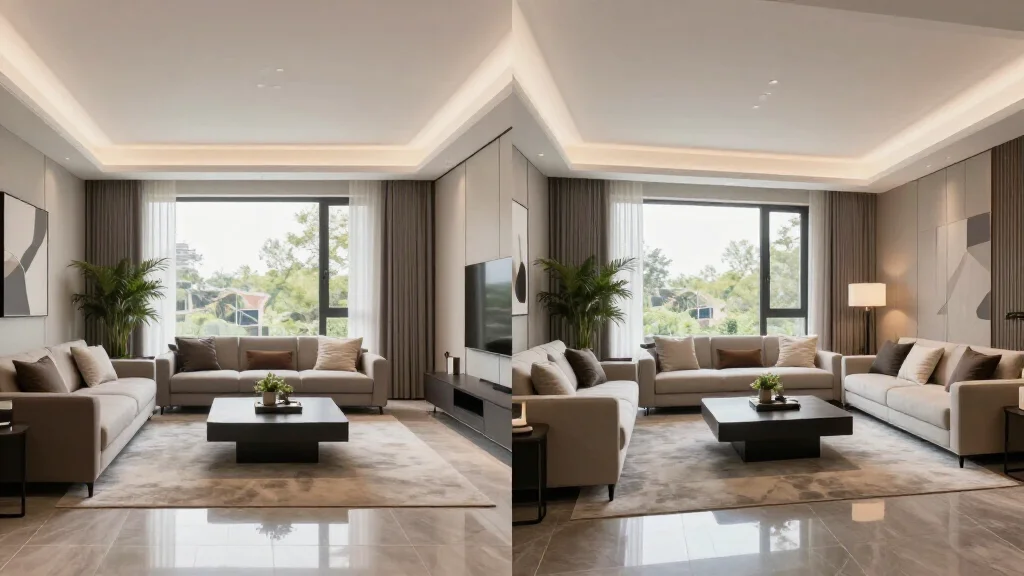
Bottom line: AI Smart Decor represents the new generation of virtual staging AI — delivering instant, photorealistic staged photos at a 90-95% cost reduction compared to traditional staging, making professional property marketing accessible to every agent at every price point.
The Market Before AI: Traditional Staging's Limitations
Physical home staging has been a proven sales tactic since the 1970s. A well-staged home photographs better, attracts more showings, and consistently sells faster than a vacant one. The National Association of Realtors has reported that staged homes spend roughly 73% less time on the market.
But traditional staging carried steep barriers. Hiring a professional stager for a single property typically cost between $2,000 and $6,000, factoring in furniture rental, delivery, setup, and the stager's design fee. Timelines stretched from one to three weeks. Logistics were complex — coordinating movers, insurance, and scheduling around showings added friction at every step.
The result was a two-tier market. Luxury listings could justify the expense and reap the rewards. Mid-range and entry-level properties, where margins were tighter and speed mattered more, often went to market with empty rooms and flat photography. Sellers in those segments were left at a measurable disadvantage.
The First Wave: Manual Virtual Staging
The earliest attempts at virtual staging addressed the cost problem but not the speed problem. Graphic designers and 3D artists manually composited furniture into photographs using Photoshop and 3ds Max. Turnaround times ranged from 24 hours to several days, and per-image costs sat between $100 and $300.
This manual approach expanded access somewhat, bringing staged visuals within reach of a broader set of listings. However, it still required skilled human labor for every single image, which meant it could not scale to meet the volume demands of busy brokerages or large property management companies.
The AI Inflection Point
The arrival of deep learning models capable of understanding spatial context, lighting, and interior design principles changed everything. Starting around 2022 and accelerating sharply through 2024 and 2025, virtual staging AI platforms began producing results that matched or exceeded the quality of manual digital staging — at a fraction of the cost and in a fraction of the time.
Several technical advances converged to make this possible:
- Generative adversarial networks (GANs) learned to produce photorealistic furniture renderings that respected a room's perspective, shadows, and ambient light.
- Diffusion models enabled finer control over style, placement, and material textures, producing images with fewer artifacts and greater visual coherence.
- Computer vision improvements allowed algorithms to accurately detect room boundaries, floor planes, window locations, and architectural features, ensuring that generated furniture fit naturally within the space.
- Cloud GPU infrastructure matured enough that heavy inference workloads could be served at low per-image costs, making consumer-grade pricing viable.
The outcome was a dramatic compression of both time and money. Tasks that once took a designer hours could now be completed in under a minute. Costs dropped from hundreds of dollars per image to single-digit figures on many platforms.
Market Growth and Adoption Rates
The numbers reflect the speed of this transformation. The global virtual staging market, valued at approximately $3.2 billion in 2023, is projected to exceed $9 billion by 2028, according to multiple industry analyses. AI-driven platforms are capturing a growing share of that market each year.
Adoption rates among real estate professionals have risen accordingly. Industry surveys from late 2025 indicated that roughly 62% of residential agents in the United States had used some form of virtual staging AI at least once, up from an estimated 28% in 2023. Among agents under 40, the figure was closer to 78%.
Several factors are accelerating uptake:
- Price accessibility. Per-image costs on AI platforms commonly range from $5 to $30, putting staged visuals within reach even for low-commission transactions.
- Speed expectations. In a market where listings go live within hours of signing, agents need staging assets immediately, not in three days.
- MLS and portal integration. Major listing platforms have become more accommodating of virtually staged images, provided proper disclosure is included.
- Remote and hybrid workflows. The normalization of digital-first real estate transactions during and after the pandemic increased comfort with digitally improved marketing assets.
Platforms like AI Smart Decor exemplify the current generation of virtual staging technology. By offering instant AI-generated staging across dozens of design styles with high-resolution output, services like these have made it practical for a solo agent to stage an entire listing in the time it takes to write the property description.
How AI Democratized Property Presentation
The most consequential impact of virtual staging AI has been its democratizing effect. Before AI, the quality of a listing's visual presentation was directly correlated with the marketing budget behind it. Sellers working with discount brokerages or listing independently were almost always at a visual disadvantage compared to those backed by full-service luxury firms.
That gap has narrowed considerably. An independent seller using an AI staging platform can now produce listing images that compete visually with those from a top-tier brokerage. This has real economic consequences — stronger listing photos translate to more views, more showings, and ultimately better sale prices.
The democratization extends geographically as well. Agents in smaller markets where professional stagers were scarce or nonexistent now have access to the same virtual staging technology as their counterparts in major metropolitan areas. The ai staging industry has effectively decoupled staging quality from local market size.
Commercial and Multifamily Applications
While residential sales drove the initial adoption wave, virtual staging AI is now expanding rapidly into adjacent sectors:
- Multifamily and property management. Operators with large portfolios use AI staging to maintain a consistent visual standard across all units without photographing and staging each one individually.
- Commercial real estate. Office, retail, and coworking spaces benefit from AI-generated furnishing concepts that help prospective tenants envision their fit-out before signing a lease.
- New construction and development. Builders use AI staging to market units before construction is complete, reducing the need for expensive physical model units.
- Short-term rental optimization. Airbnb and VRBO hosts test different staging styles digitally to identify which aesthetic drives the highest booking rates.
Ethical Considerations and Industry Standards
The rapid adoption of virtual staging technology has raised legitimate questions about transparency and buyer expectations. The core concern is straightforward: if a buyer walks into a property expecting the warmth and furnishing of the staged photos and finds an empty room, trust erodes.
The industry has largely converged on a disclosure-based approach. Most MLS systems now require that virtually staged images be labeled as such, and best practices call for including at least some unstaged photos in every listing. Several state real estate commissions have issued guidance reinforcing this expectation.
The more nuanced ethical territory involves AI's ability to alter structural elements — removing cracks, changing wall colors, or modifying room layouts. Responsible platforms draw a clear line between staging (adding removable furnishings) and material alteration (changing the physical property), and the emerging consensus is that only the former is appropriate for listing photos.
Future Predictions: Where Virtual Staging AI Is Headed
The current state of virtual staging technology is impressive, but several emerging trends suggest the market is far from mature:
Real-time staging in video and 3D tours. Static image staging is already commoditized. The next frontier is applying AI staging to video walkthroughs and interactive 3D tours, allowing buyers to experience a furnished property in motion rather than in still frames.
Tailored staging for individual buyers. As AI models grow more sophisticated, the possibility of staging a property to match a specific buyer's taste — based on their browsing history, saved listings, or stated preferences — becomes technically feasible. This would shift staging from a one-to-many marketing asset to a one-to-one sales tool.
Augmented reality integration. AR-enabled staging, where buyers view AI-generated furniture overlaid on a live camera feed during showings, is already in prototype at several companies. Widespread adoption depends on improvements in mobile AR hardware and consumer comfort with the technology.
Quality convergence with physical staging. As rendering fidelity continues to improve, the visual gap between AI-staged images and photographs of physically staged homes will effectively disappear. At that point, physical staging for marketing purposes may persist only in the ultra-luxury segment where tactile experience during showings remains a factor.
Deeper integration with transaction platforms. Virtual staging will increasingly be embedded directly into listing creation workflows, CRM systems, and buyer-facing search portals rather than existing as a standalone step.
What This Means for the Industry
The broad takeaway is that virtual staging AI has permanently lowered the floor for listing presentation quality. The competitive advantage now lies not in whether an agent stages their listings, but in how strategically they use staging — which styles resonate with target demographics, how staging fits into pricing strategy, and how quickly visuals can be adapted based on market feedback.
For the staging industry itself, the shift mirrors patterns seen in other creative fields impacted by AI. Manual virtual staging services are consolidating or pivoting toward higher-value offerings. Physical staging companies are repositioning around the luxury segment where in-person experience still commands a premium.
The agents best positioned for the next phase are those treating virtual staging technology as core infrastructure — built-in into their standard listing workflow the same way professional photography became standard a decade ago.
Frequently Asked Questions
How has virtual staging AI changed the cost of staging a property?
Virtual staging AI has reduced staging costs by approximately 90-95% compared to physical staging. Where traditional staging runs $2,000 to $6,000 per property, AI platforms typically charge between $5 and $50 per image. This price compression has made professional-quality staged visuals accessible to virtually every listing, regardless of price point.
What is the current adoption rate of AI staging among real estate agents?
As of late 2025, industry surveys indicate that roughly 62% of residential real estate agents in the United States have used virtual staging AI at least once, with significantly higher rates among younger agents. Adoption is growing at an estimated 15-20% year-over-year as platform quality improves and costs continue to decline.
Will AI staging replace physical home staging entirely?
It is unlikely that AI staging will completely eliminate physical staging, but it has already replaced it for the majority of use cases. Physical staging retains an advantage in ultra-luxury properties where buyers expect a curated in-person experience during showings. For the vast majority of residential listings, however, AI staging delivers comparable marketing impact at a fraction of the cost and timeline.
Are there regulations governing the use of virtual staging AI in real estate listings?
Most MLS systems require that virtually staged images be clearly labeled as such, and several state real estate commissions have issued formal guidance on disclosure requirements. The industry standard is to include both staged and unstaged photos in every listing. Responsible use of virtual staging technology means adding furnishings and decor without altering the physical characteristics of the property.
How does AI staging quality compare to manually edited virtual staging?
Current-generation AI staging platforms produce results that are visually comparable to — and often indistinguishable from — images created by skilled graphic designers through manual compositing. The primary advantages of AI are speed and consistency: a platform can produce dozens of staged images in the time it takes a designer to complete one, with uniform quality across every output.