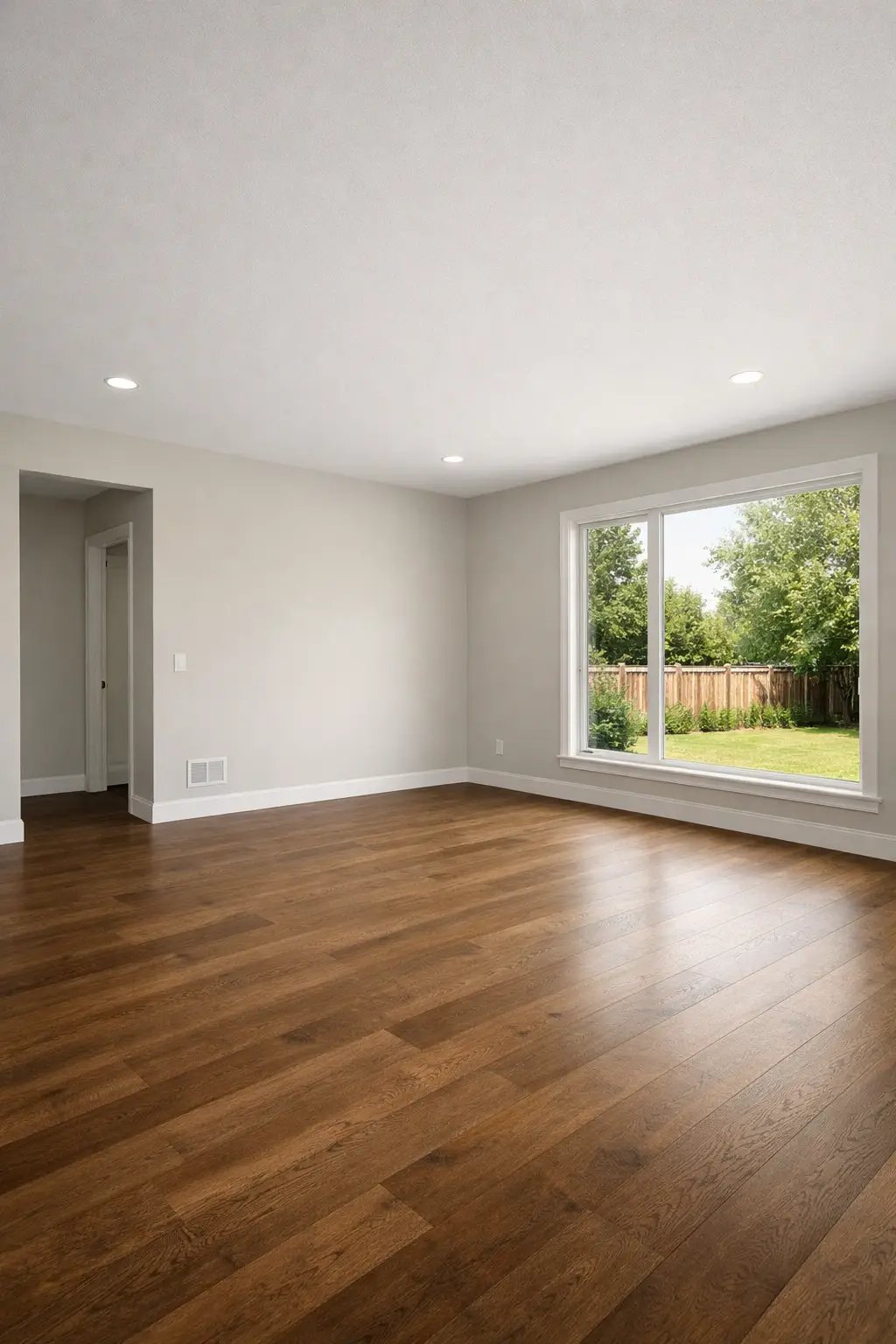
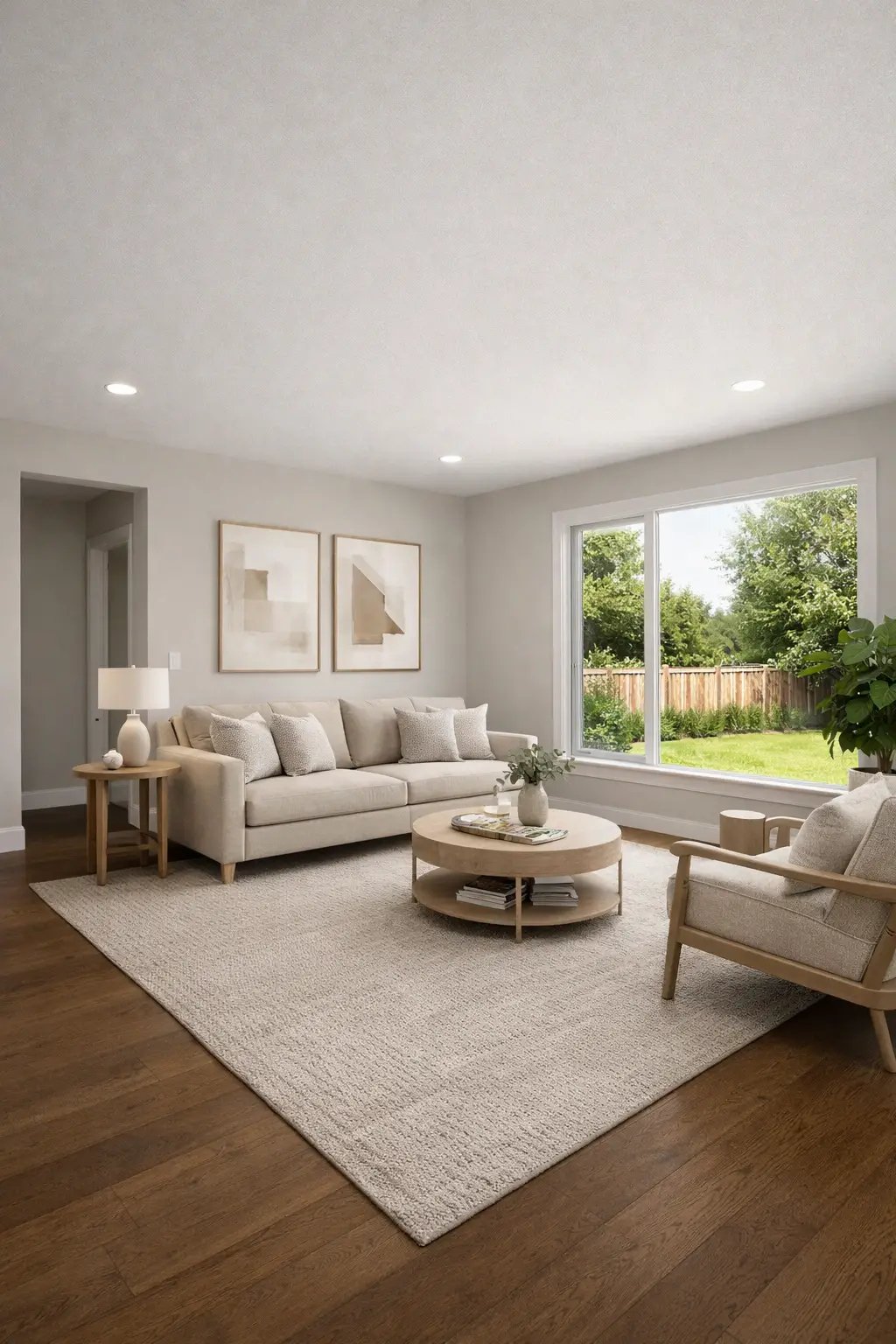
Real estate agents have been using virtual staging for years now, but the technology behind it has split into two distinct camps: AI-powered staging and traditional human-edited staging. If you have explored virtual staging for realtors broadly, you already know the value of digitally furnishing empty rooms. This article narrows the lens to AI virtual staging for realtors specifically and explains why it has become the default choice for the majority of working agents.

AI Staging vs. Human-Edited Staging: The Core Difference
Human-edited virtual staging relies on graphic designers who manually place 3D furniture models into your listing photos using software like Photoshop or specialized rendering tools. A skilled editor can produce stunning results, but the process takes hours per image and carries a price tag that reflects that labor.
AI-powered virtual staging uses trained machine learning models to analyze your photo, understand the room geometry, lighting conditions, and architectural features, and then generate a fully staged version automatically. The entire process happens in seconds. Platforms like AI Smart Decor have refined these models to the point where the output quality rivals human editing for the vast majority of standard real estate scenarios.
The practical difference for agents comes down to three things: speed, cost, and scalability. AI staging wins decisively on all three for most use cases.
The Speed Advantage: Minutes, Not Days
Speed is arguably the single biggest reason AI staging for agents has overtaken human-edited workflows. Here is what the timeline looks like in practice:
- AI-powered virtual staging: Upload a photo and receive a staged version in 30 seconds to 2 minutes. No scheduling, no back-and-forth, no waiting for a designer's availability.
- Human-edited staging: Submit your photos, wait 24 to 48 hours for a first draft, request revisions, wait another 12 to 24 hours for the final version.
For agents juggling multiple listings, that speed gap is not a minor convenience. It is the difference between having your staged photos ready for the MLS the same afternoon you shoot the property versus waiting until next week. In markets where the first 48 hours of a listing generate the most buyer attention, getting professional-looking staged images live immediately translates directly into more showings and stronger offers.
The speed advantage also changes how you approach staging strategically. With AI, you can stage a property in multiple styles within minutes to test which aesthetic resonates most with your target buyer demographic before committing to a single look. That kind of rapid experimentation simply is not practical when each variation costs $100+ and takes two days.
The Cost Advantage: 90-95% Savings Are Real
The cost comparison between AI and human-edited staging is stark, and it has only widened as AI platforms have matured.
Human-edited virtual staging typically runs $75 to $200 per image. A full property with five to six rooms staged costs $400 to $1,200. For agents listing multiple properties per month, that expense adds up quickly and eats directly into commission margins.
AI virtual staging through platforms like AI Smart Decor starts with free tiers and scales to roughly $5 to $30 per image on paid plans, with monthly subscriptions offering even better per-image economics for high-volume agents. Staging that same five-to-six-room property might cost $25 to $50 total.
For a solo agent listing eight to ten properties per year, the annual savings can easily exceed $5,000. For a small brokerage with a team of agents, the math becomes even more compelling. Those savings can be redirected toward marketing spend, better photography, or simply better margins on each transaction.
The cost structure also removes a psychological barrier. When staging costs $150 per room, agents tend to be selective about which rooms they stage. When it costs $5 per room, you stage everything. The living room, the primary bedroom, the kitchen, the home office, the outdoor patio. More staged photos means a more complete visual story for buyers browsing online, which means more engagement with your listing.
How AI Handles Different Room Types
One of the most common concerns agents raise about AI staging is whether it can handle the full variety of rooms in a typical listing. The answer in 2026 is a confident yes, with some nuances worth understanding.
Living rooms and bedrooms are where AI staging performs at its absolute best. These rooms have predictable layouts, standard furniture expectations, and straightforward lighting conditions. AI models have been trained on millions of these images, and the results are consistently polished and realistic.
Kitchens present a slightly more complex challenge because they involve fixed elements like countertops, cabinets, and appliances alongside decorative staging items. Modern AI staging tools handle kitchen styling well, adding items like fruit bowls, small appliances, bar stools, and table settings that bring warmth without conflicting with existing fixtures.
Bathrooms are similar to kitchens in that the major elements are fixed. AI staging adds towels, candles, decorative accessories, and plants to create an inviting atmosphere. The results are reliable and consistent across most bathroom configurations.
Home offices have become increasingly important since remote work normalized, and AI handles them well. Desks, chairs, bookshelves, monitors, and decorative items are placed with appropriate scale and positioning.
Outdoor spaces including patios, decks, and yards are where AI has made the most noticeable improvement over the past year. Earlier models sometimes struggled with natural lighting and irregular outdoor geometry, but current platforms render outdoor furniture, planters, fire pits, and dining sets convincingly.
Unusual or non-standard spaces such as sunrooms, lofts with extreme angles, or rooms with unusual architectural features are where you may occasionally see AI produce results that need a second attempt or a different style selection. Most platforms allow you to regenerate with a single click, which resolves the issue in most cases.
Limitations of AI Staging That Agents Should Know
AI virtual staging is not perfect, and understanding its limitations makes you a more effective user of the technology. Here are the honest trade-offs you should be aware of.
Consistency across a listing can vary. When a human editor stages an entire property, they can ensure a cohesive design language across every room. AI generates each image independently, which means the living room might lean mid-century modern while the bedroom skews contemporary if you are not deliberate about selecting the same style for every room. The fix is simple: choose one style and apply it consistently, but you do need to be intentional about it.
Extremely cluttered or damaged rooms are problematic. AI staging works best with empty or near-empty rooms. If a room has existing furniture, personal items, or visible damage, the AI may produce awkward overlaps or fail to mask problem areas. For occupied homes that need virtual renovation or decluttering before staging, human editing still has the edge.
Fine architectural details can occasionally be lost. Crown molding, built-in shelving, or unique window treatments might get partially obscured or altered by AI-generated furniture placement. This is rare with modern platforms, but it happens enough that you should review each image carefully before publishing.
Luxury and ultra-high-end properties deserve extra scrutiny. For multi-million-dollar listings where every visual detail matters and buyers expect absolute perfection, AI staging might not meet the elevated bar on its own. The staging will look professional, but it may not have the bespoke, magazine-editorial quality that a skilled human designer can achieve when given the time and budget.
When to Use Human Editing Instead
Despite AI's advantages, there are specific scenarios where human-edited virtual staging remains the better choice.
Occupied homes that need virtual decluttering or furniture removal before staging is applied are better served by human editors who can carefully remove existing items without artifacts.
High-value luxury listings where the commission justifies premium marketing investment and where the staging needs to feel curated and unique rather than polished and efficient.
Virtual renovation projects where you want to show a kitchen with new cabinets, updated flooring, or a remodeled bathroom. This goes beyond staging into rendering territory, and human editors working with 3D modeling tools still produce superior results for these transformations.
Properties with unique selling points tied to specific architectural features that you want the staging to highlight rather than compete with. A human editor can make creative decisions about how to draw the eye toward a dramatic fireplace or floor-to-ceiling windows in ways that AI cannot yet replicate reliably.
For most agents listing most properties, AI-powered virtual staging handles the job beautifully. Reserve human editing for the 10 to 15 percent of listings where the stakes or the complexity justify the added cost and time. For everything else, explore the best AI virtual staging platforms and find one that fits your workflow.
Getting Started with AI Staging for Your Listings
The barrier to entry is essentially zero. Platforms like AI Smart Decor offer free tiers that let you stage your first images without any financial commitment. The workflow is straightforward: upload a photo of an empty room, select a style, and download the staged version in under two minutes.
For agents evaluating different platforms, look at our comparison of virtual staging services and our guide to choosing a virtual staging platform that fits your volume and budget.
The agents who are winning listings in 2026 are the ones who stage every property as a matter of course, not as a special-occasion splurge. AI staging makes that economically and logistically feasible for the first time.
Frequently Asked Questions
Is AI virtual staging good enough to replace human-edited staging for most listings?
Yes. For standard residential listings including single-family homes, condos, and townhouses, AI-powered virtual staging produces results that are visually comparable to human-edited staging. The quality gap has narrowed significantly, and for the vast majority of MLS listings, buyers cannot distinguish between AI-generated and human-edited staged photos. The scenarios where human editing is clearly superior are occupied homes needing furniture removal, virtual renovations, and ultra-luxury properties.
How does AI staging handle rooms with existing furniture?
Most AI staging tools are optimized for empty or near-empty rooms. If a room contains existing furniture, the AI may attempt to blend new items with what is already there, which can produce unnatural results. Some platforms offer a "remove and restage" feature that attempts to clear existing furniture before adding new pieces, but the results are inconsistent. For occupied homes, human editing remains the more reliable option for clean furniture replacement.
Do I need to disclose AI virtual staging on MLS listings?
Yes. MLS rules require disclosure of any virtually staged images regardless of whether they were created by AI or a human editor. Most MLS platforms have a specific field or checkbox for virtual staging disclosure. Failing to disclose can result in complaints, fines, or disciplinary action from your local board. Always label staged images clearly in your listing description as well.
Can I use AI staging for commercial real estate listings?
AI staging tools are primarily trained on residential interiors, so they perform best in that context. For standard commercial spaces like offices, retail showrooms, and restaurant dining areas, AI staging can produce usable results. However, for specialized commercial spaces such as warehouses, medical facilities, or industrial properties, the AI models may not have sufficient training data to generate convincing staged images. Test with a sample image before committing to a full staging project.
How many styles should I stage each room in?
For most listings, staging each room in one well-chosen style is sufficient. However, if you are marketing to multiple buyer demographics or testing which aesthetic drives the most engagement, staging two to three styles per key room (living room, primary bedroom, kitchen) can be valuable. Because AI staging is fast and affordable, experimenting with multiple styles is practical in a way it never was with human-edited staging.